Munster
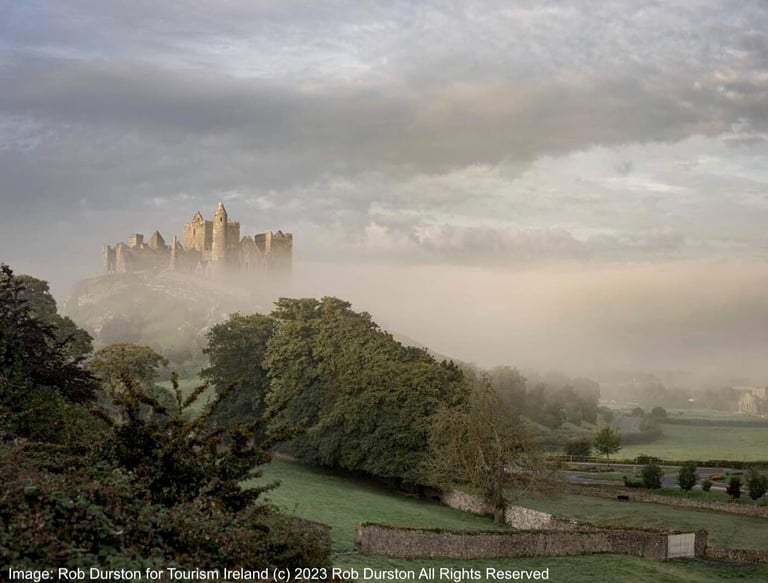
The Rock of Cashel
St. Patrick's Rock of Cashel
Cashel, Co. Tipperary, E25 KX44
https://heritageireland.ie/places-to-visit/the-rock-of-cashel/
Adult ticket: €8
Set on a dramatic outcrop of limestone in the Golden Vale, The Rock of Cashel, iconic in its historic significance, possesses the most impressive cluster of medieval buildings in Ireland. Among the monuments to be found there is a round tower, a high cross, a Romanesque chapel, a Gothic cathedral, an abbey, the Hall of the Vicars Choral and a fifteenth-century Tower House.
Originally the seat of the kings of Munster, according to legend St. Patrick himself came here to convert King Aenghus to Christianity. Brian Boru was crowned High King at Cashel in 978 and made it his capital.
In 1101 the site was granted to the church and Cashel swiftly rose to prominence as one of the most significant centres of ecclesiastical power in the country.
The surviving buildings are remarkable. Cormac’s Chapel, for example, contains the only surviving Romanesque frescoes in Ireland.
The Rock of Cashel is one of Ireland’s most spectacular and – deservedly – most visited tourist attractions.
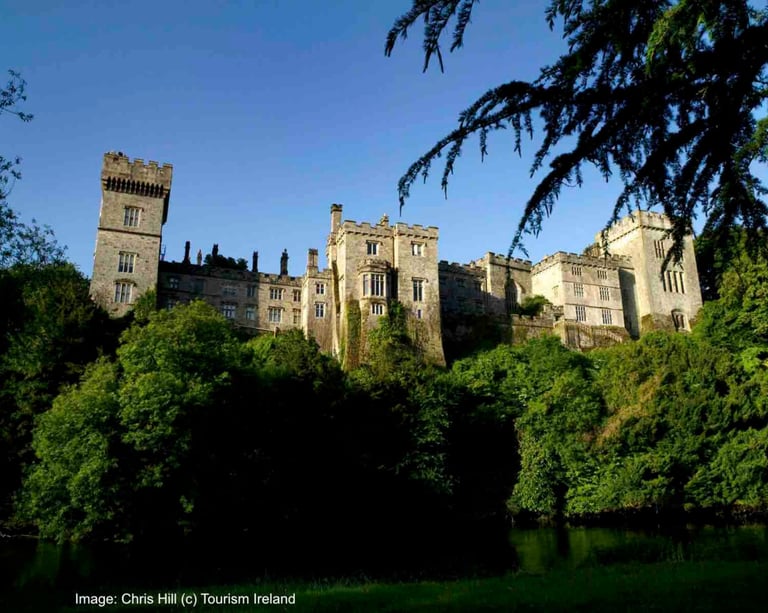
Lismore Castle & Gardens
https://www.irishtourism.com/lismore-castle-and-gardens
Lismore Castle is a castle located in the town of Lismore, County Waterford, Ireland. It belonged to the Earls of Desmond, the Earls of Cork, and then to the Cavendish family from 1753. It is currently the Irish home of the Duke of Devonshire.
Although the castle is NOT open to the public, the Lismore Castle Gardens can be visited.
Cork
Although Cork is known as the Republic of Ireland’s second city, Corkonians often refer to Cork as ‘the real capital’.
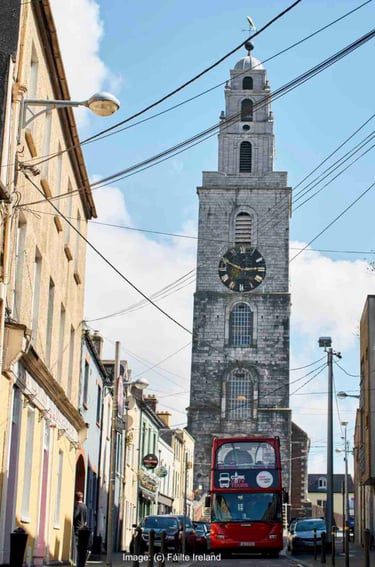
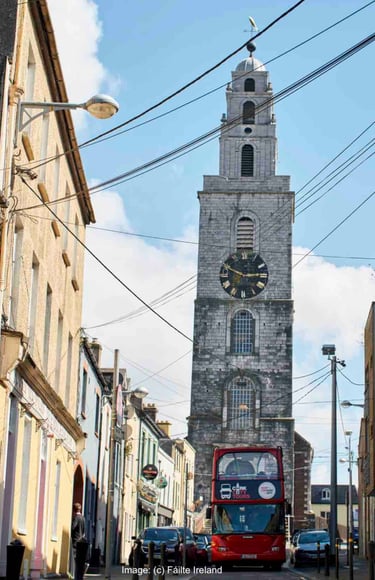
Among its many attractions are the Crawford Art Gallery, (temporarily closed), the English Market, and St Anne's Church in Shandon, of which the bell tower, with a gilded salmon weathervane, rises above the city and is nicknamed the 'Four-Faced Liar' due to the clocks on each side.
A short train ride away are Fota House and Gardens, Fota Wildlife Park, and the lovely harbour of Cobh (pronounced Cove), from where a boat trip will take you to historic Spike Island, once a British military fortress and prison that held convicts awaiting transportation, among them political prisoners from Ireland's struggle for independence.
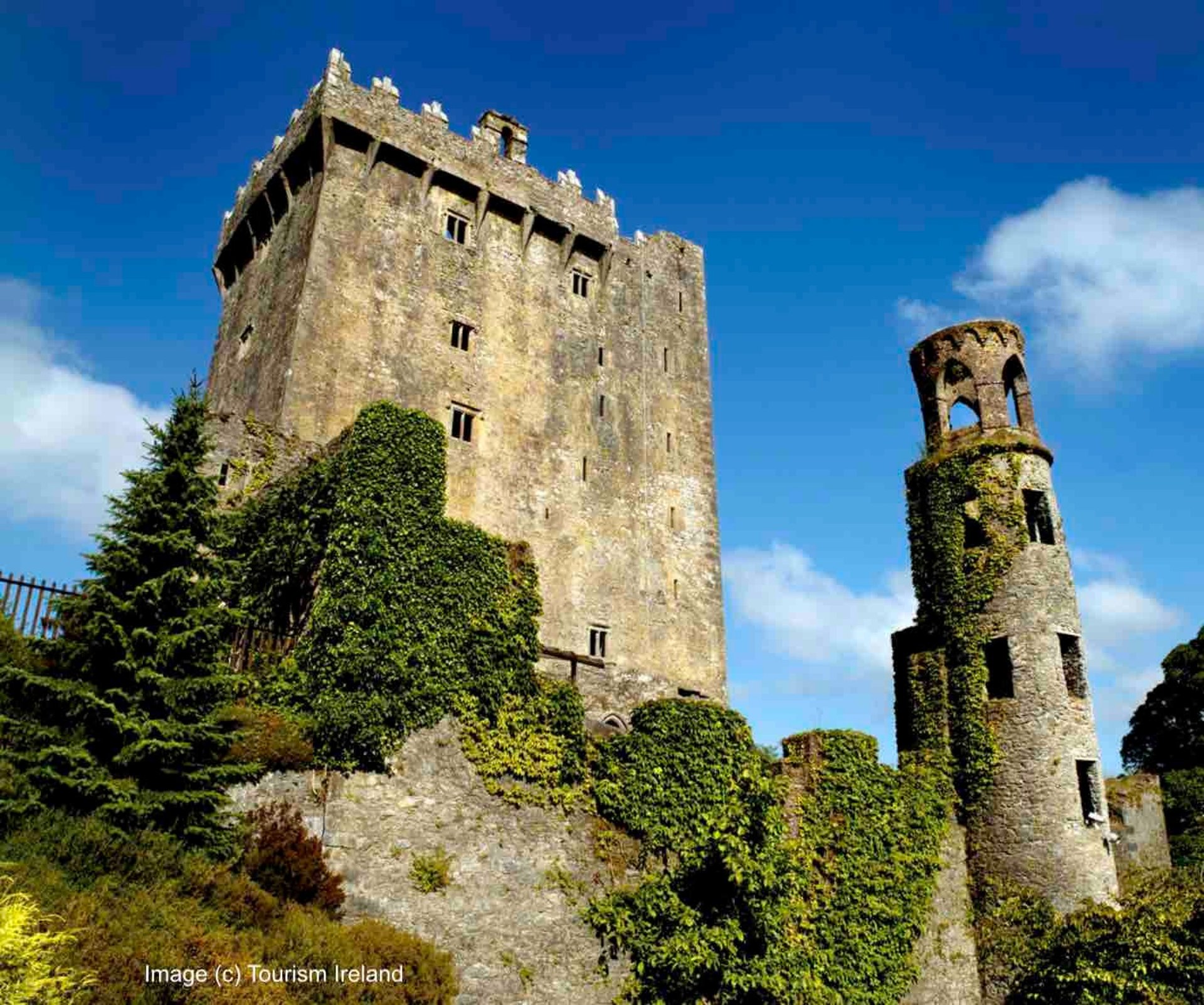
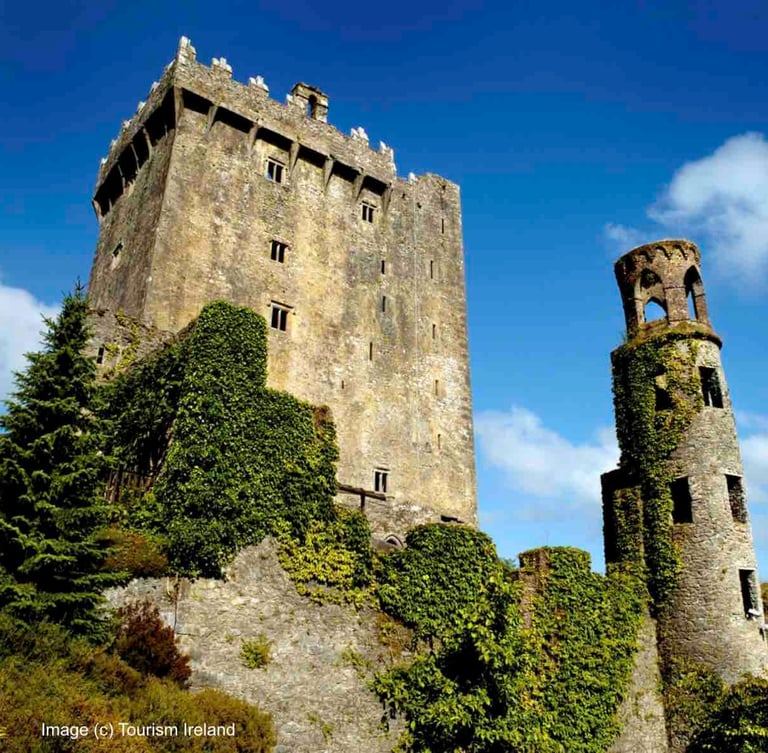
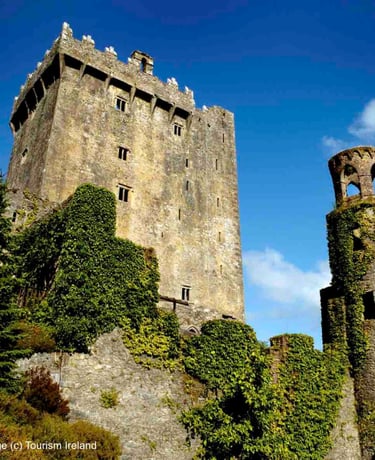
Blarney Castle
Blarney Castle, Blarney, Cork https://blarneycastle.ie/
Adult Ticket: €24
Welcome to Blarney Castle, the home of the Blarney Stone. Built nearly six hundred years ago by one of Ireland’s greatest chieftains, Cormac MacCarthy, it has been attracting attention ever since. Over the last few hundred years, millions have flocked to Blarney making it a world landmark and one of Ireland’s greatest treasures.
Now that might have something to do with the Blarney Stone, the legendary Stone of Eloquence, found at the top of our tower. Kiss it and you’ll never again be lost for words.
Kerry
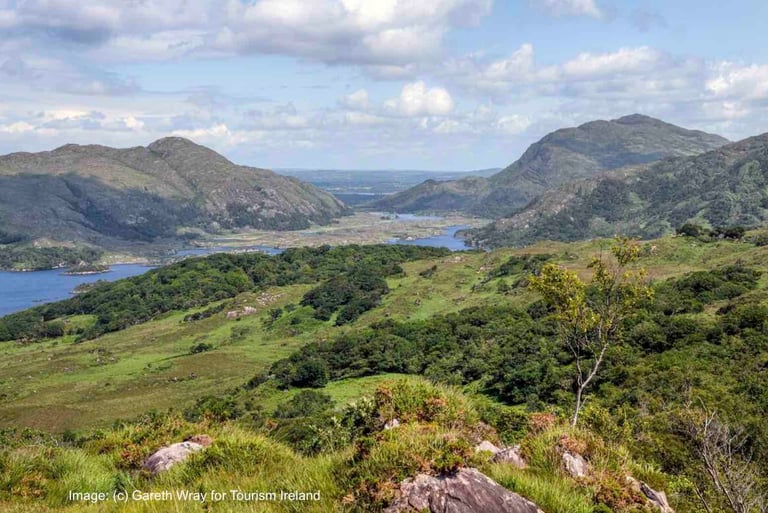
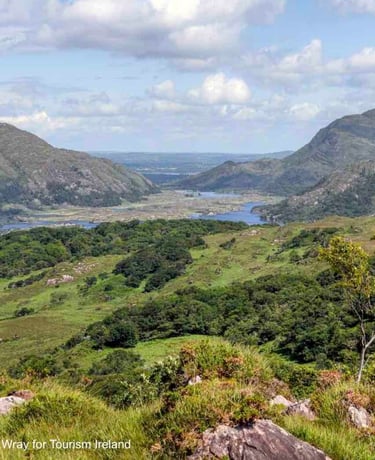
County Kerry, in the peninsular southwest region of Ireland, is known for its pockets of Irish-language speakers and striking terrain. Passing rugged coastline and mountains, the Ring of Kerry is a popular scenic driving route skirting the edges of the Iveragh Peninsula.
Muckross House, Gardens & Traditional Farms
The National Park, Killarney, Co Kerry
Guiding Service, Muckross House - Tel: +353 (0) 64 6670144
Adult Ticket: €9
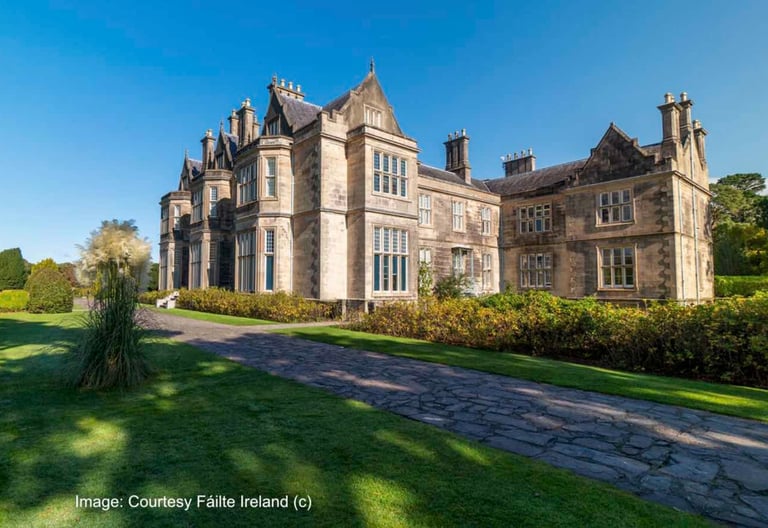
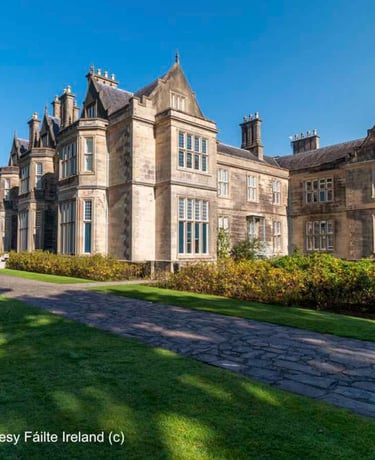
Muckross House, Gardens and Traditional Farms is Kerry’s premier visitor attraction. Set in the heart of Killarney National Park, Muckross is known throughout the world for its scenic beauty and cultural attractions, including the magnificent house itself, craft workshops, Garden Restaurant and 1920’s style working farm.
Clare
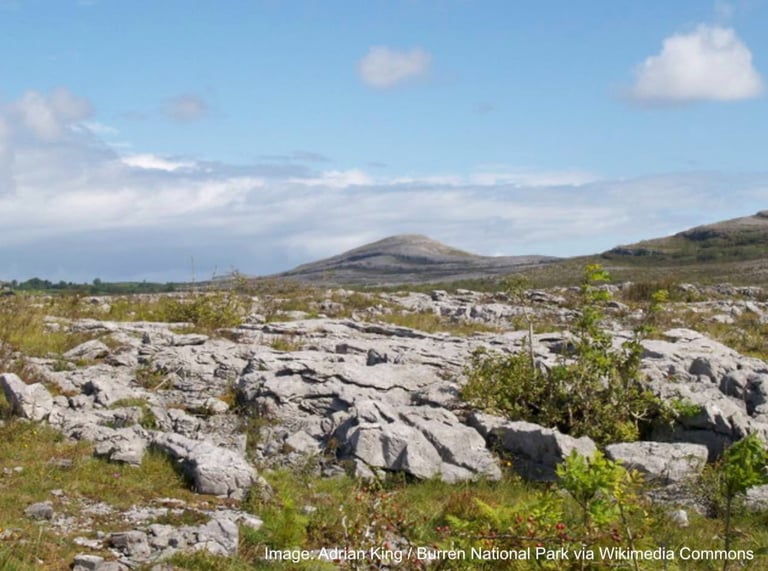
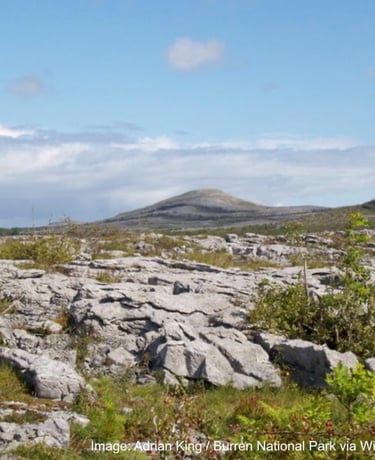
Co. Clare is a county in Munster in western Ireland with terrain ranging from rolling countryside to craggy Atlantic coastline. The Burren National Park, a uniquely rocky wilderness area, shelters Stone Age monuments and ancient churches, and atop the 213m-high Cliffs of Moher, O’Brien’s Tower offers sweeping ocean views. Outside the gateway town of Shannon, 15th-century Bunratty Castle and its folk park reenact medieval-era banquets.
Poulnabrone Portal Tomb
Poulnabrone Portal Tomb, Kilcorney, The Burren, County Clare
https://heritageireland.ie/unguided-sites/poulnabrone-portal-tomb/
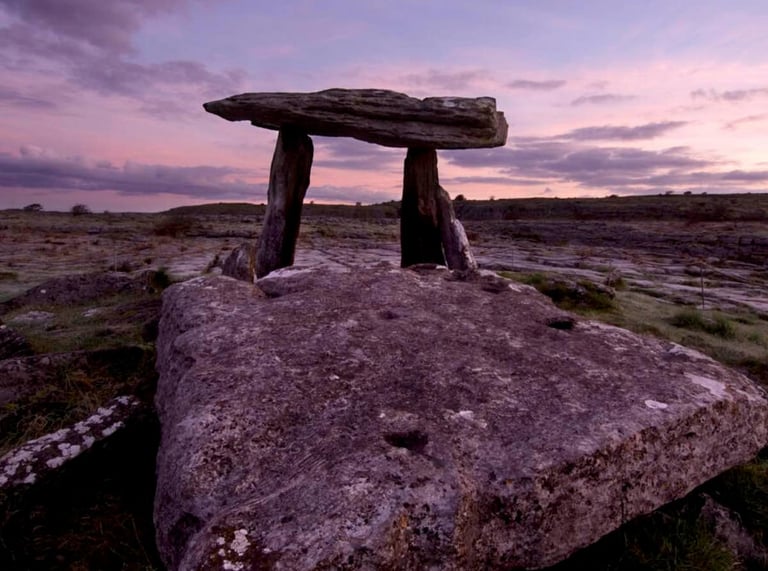
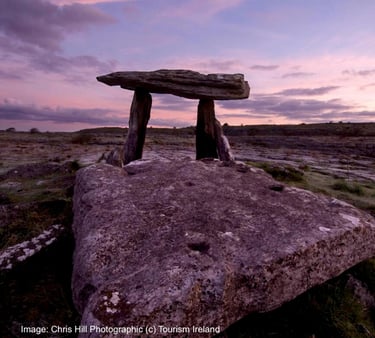
Poulnabrone Portal Tomb is a large dolmen (or cromlech, a type of single-chamber portal tomb) located in the Burren, County Clare, Ireland. Situated on one of the region's most desolate and highest points, it comprises three standing portal stones supporting a heavy horizontal capstone and dates to the early Neolithic period, with estimates from 3800 and 3200 BC. Although not the largest, it is the best known of the approximately 172 dolmens in Ireland.
During excavations, the remains of around 33 people were found buried within the chamber. Although it was usually difficult —or impossible —to distinguish the remains of each individual, Lynch estimates that at least 17 were adolescent or younger, while there was roughly an equal amount of males and females. All but one of the identified adults were under the age of 30. They lived between 3800 and 3200 BC, and can be assumed to have been members of successive generations of a specific Neolithic community. The remains of a sixth-month old baby with Down syndrome were found at the megalith. This is thought to be the earliest discovered case of Down Syndrome. There was evidence that the infant had been breastfed prior to their death.
There is a car park nearby, with no entrance fee to visit the dolmen as this is an unguided site.
Craggaunowen Castle & Crannóg
Craggaunowen, Kilmurry, Co. Clare, V95 AD7E
For general enquiries, please contact: +353 (0) 61 - 711222
Adult ticket: €10
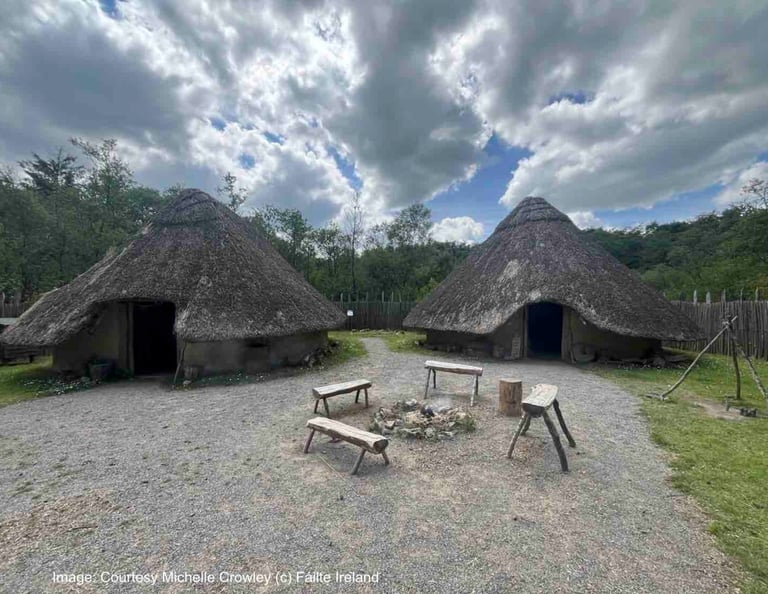
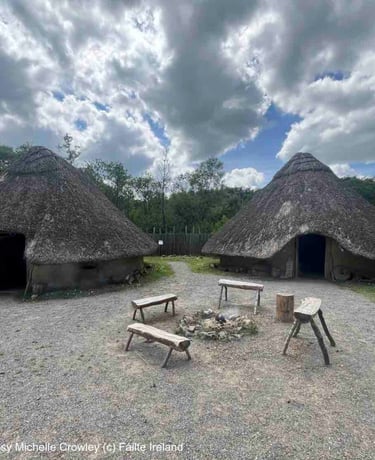
Step into a world where Ireland’s past comes vividly to life. Craggaunowen Castle, built around 1550 by John MacSioda MacNamara, has stood through centuries of history—from a medieval stronghold to a 19th-century restoration, and now a thriving open-air museum thanks to the vision of John Hunt. Wander the castle grounds and explore reconstructed Bronze Age Crannógs, early Christian ringforts, and Iron Age trackways, bringing the lives of Ireland’s ancestors vividly to life.
At Craggaunowen, history is hands-on. Experience how early settlers lived, worked, and survived: explore underground souterrains, Fulacht Fiadh cooking sites, and Crannóg roundhouses. Discover legendary voyages at the Brendan Boat, meticulously recreated by Tim Severin to retrace the Atlantic journey of St Brendan the Navigator.
"When the legend becomes fact, print the legend..."
Subscribe for email updates:
© 2025, 2026. All rights reserved.
Web design: Maybelle Wallis
Special thanks to Ireland's Content Pool for permission to use images
Contact the HNS 2026 team:
Proudly sponsored by Fáilte Ireland, by the Irish Writers' Union, and by Larbok Creative:
Extend your stay - Discover Ireland!

Hosting Irish PEN: