Leinster
Glendalough
https://glendalough.ie/heritage/glendalough-visitor-centre/
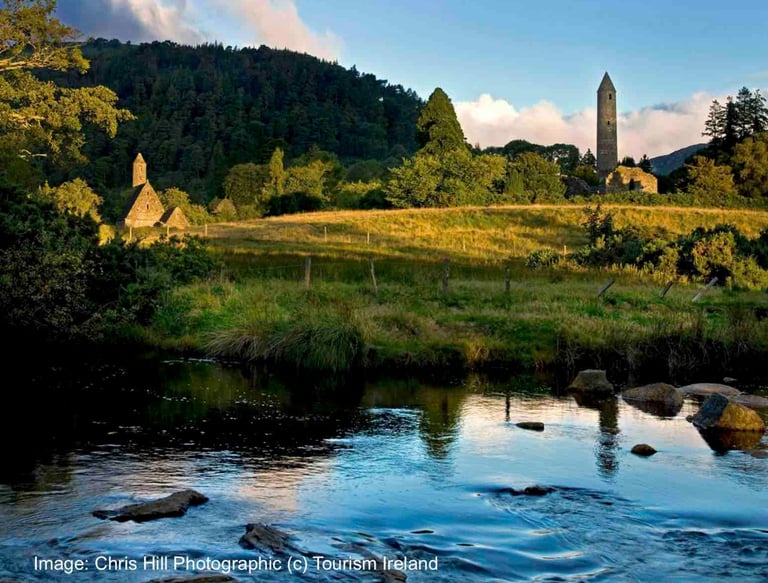
Glendalough is one of Ireland’s most important monastic sites. It lies in a beautiful valley between two lakes in county Wicklow. The earliest stories of the life of St Kevin or Cóemgen – its patron saint - (d.618 AD) describe how a nobleman led a simple life of prayer here and banished a monster from the lake. The story of its founder speaks of someone seeking solitude and silence from the world in a remote mountain valley. The idea of retreating from the world around us and entering isolation is something that resonates strongly at this time, as our society emerges from a period of extended isolation.
To book a tour of the Monastic Site – contact the Visitor Centre on +353 (0) 404 45325/45352.
Please note that bookings are only taken by telephone or fax – not by e-mail.
Russborough House
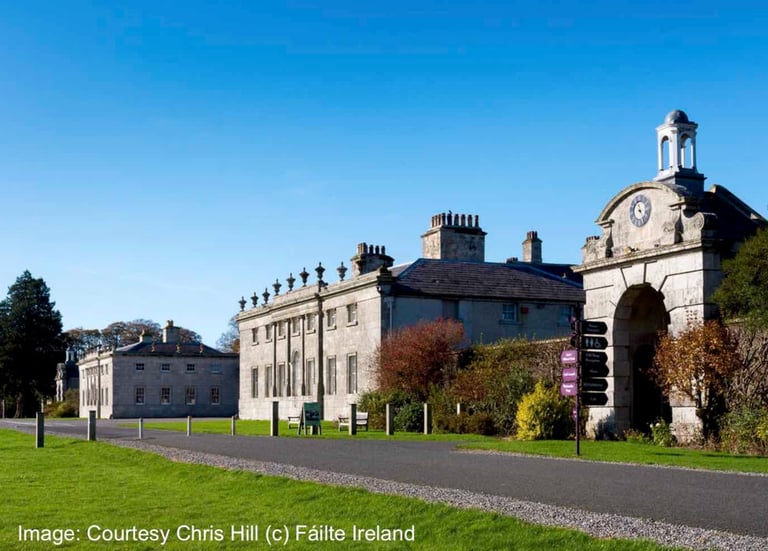
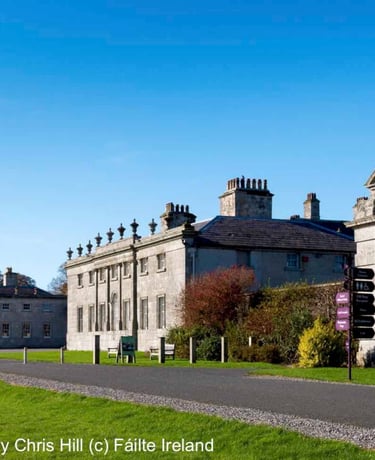
Nestled in the heart of County Wicklow, Russborough stands as a testament to Ireland’s rich architectural heritage and the legacies of the families who called it home. From its grand Palladian design to the meticulously crafted interiors and expansive Parklands, Russborough offers a glimpse into the opulent lifestyles of the 18th and 19th Centuries.
Tickets from €14.50.
Irish National Heritage Park, Wexford
Irish National Heritage Park, Ferrycarrig, Co. Wexford, Ireland, Y35 X313
email: bookings@irishheritage.ie Phone: +353 (0) 53 9120733.
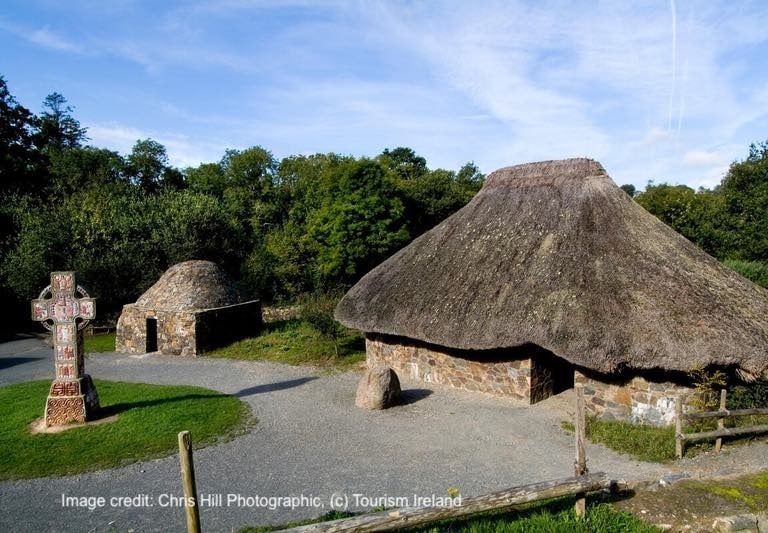
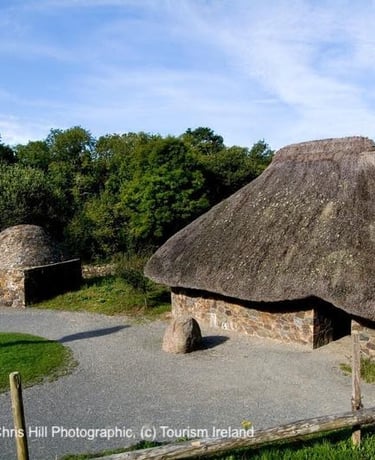
This 35 acre park, beautifully located beside the River Slaney, has 16 reconstructed sites illustrating how people lived from prehistoric times to the early mediaeval period. Guided tours and heritage experiences bring the past to life.
Adult admission: €18.00
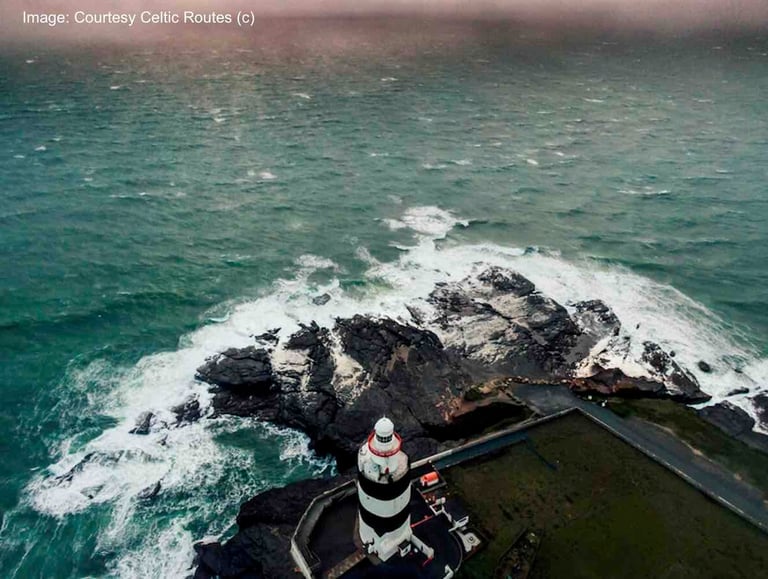
Hook Lighthouse
Hook Lighthouse, Hook Head, Co. Wexford, Ireland.
email: info@hookheritage.ie Phone: (+353) 051 397055
The oldest intact operational lighthouse in the world. Replacing an ancient beacon maintained by monks, the lighthouse tower was begun 800 years ago by the Norman knight William Marshal. Guided tours illuminate the history and bring you up to the viewing balcony. Outside the site you can explore the rocky shoreline, but be very careful in rough weather.
Guided tour: from €15.79
Kennedy Homestead
Kennedy Homestead, Dunganstown, New Ross, Co Wexford
Email info@kennedyhomestead.ie Phone: +353 (0)51 388264
https://www.kennedyhomestead.ie
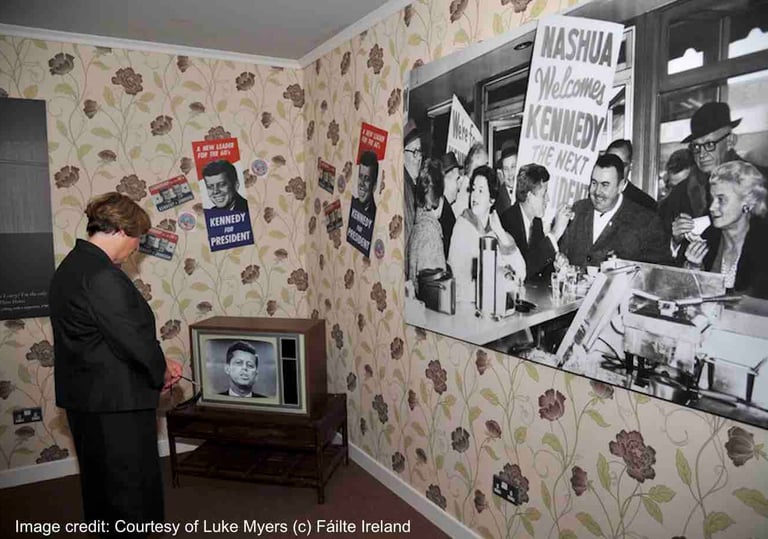
The Kennedy Homestead in rural south Wexford was the birthplace of President John F. Kennedy’s great-grandfather Patrick Kennedy. The curators of the Kennedy Homestead Visitor Centre, using the Kennedy Library archival collection in Boston, have created a state of the art interpretative exhibit which explores the circumstances of Patrick Kennedy’s departure from Ireland in 1848 and pieces together the story of the most famous Irish–American family through the 20th century to the present day. Adult admission €11.
Nearby is the beautiful 252 hectare JFK Memorial Arboretum. https://heritageireland.ie/places-to-visit/the-john-f-kennedy-arboretum/
Dunbrody Famine Ship
Dunbrody Famine Ship, New Ross, Y34A786 Co. Wexford.
Email: info@dunbrody.com Phone: +353 (0)51 425239
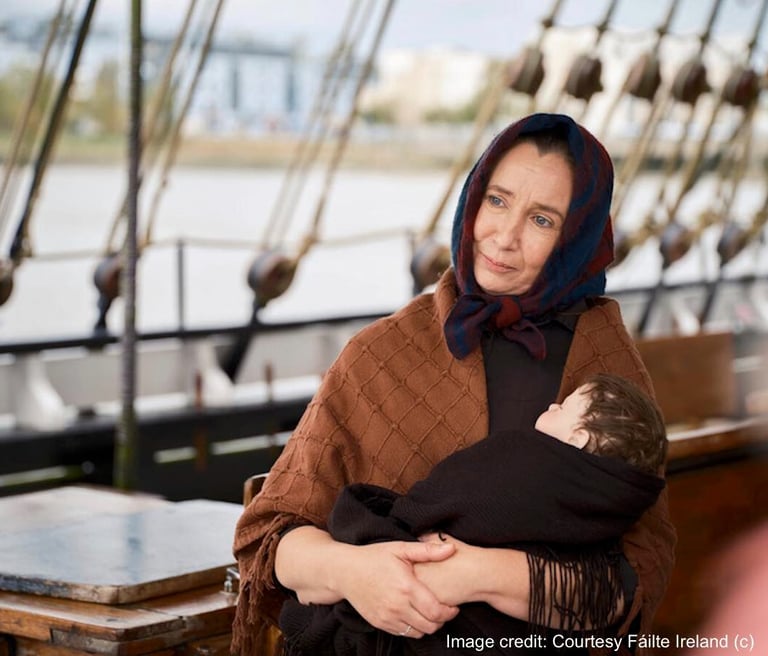
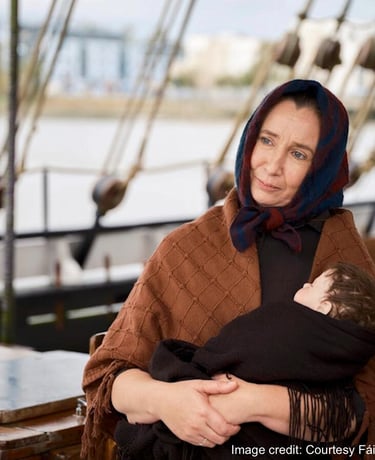
Moored at the quay in New Ross, the Dunbrody is an authentic reproduction of an 1840’s emigrant vessel. Incorporating guided tour, costumed performers and themed exhibitions incuding the ‘Irish America Hall of Fame’, ‘The Dunbrody’ helps visitors relive the bravery and fortitude with which Irish people faced up to a desperate situation, providing a world-class interpretation of the famine emigrant experience.
Adult Ship Tour €15
Waterford Treasures
https://waterfordtreasures.com
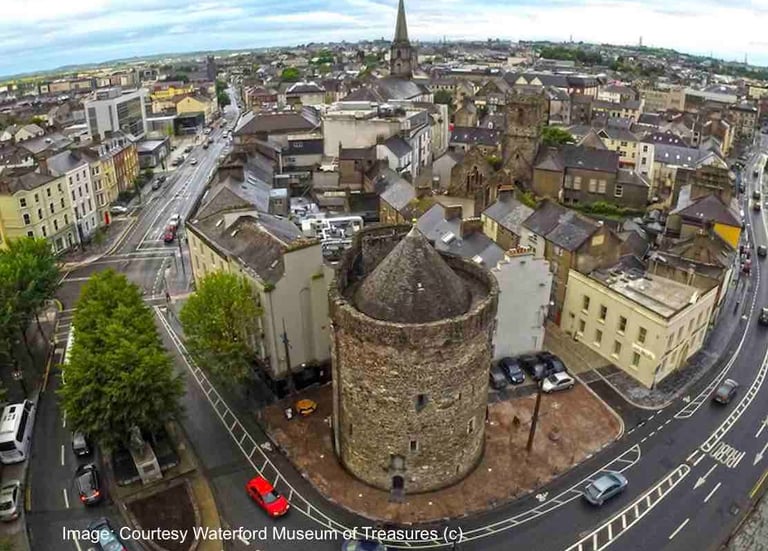
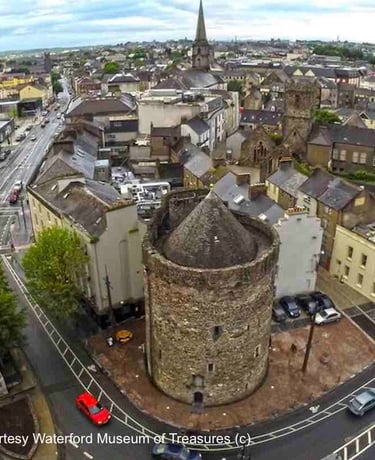
Located within a few paces of each other, this group of multi-award-winning museums in the centre of Ireland's oldest city tell the 1,100-year-old story of Waterford from its foundation in 914 AD by Viking sea pirates.
They comprise: Mediaeval Museum, Bishop’s Palace, Irish Silver Museum, Irish Museum of Time, Irish Wake Museum, Reginald’s Tower, Epic Walking Tour, King of the Vikings.
Trim Castle – Norman Keep
https://heritageireland.ie/visit/places-to-visit/trim-castle/
Adult ticket: €5
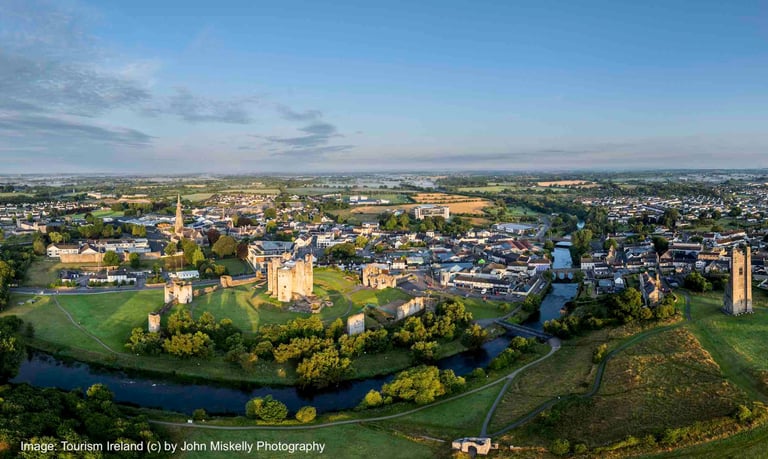
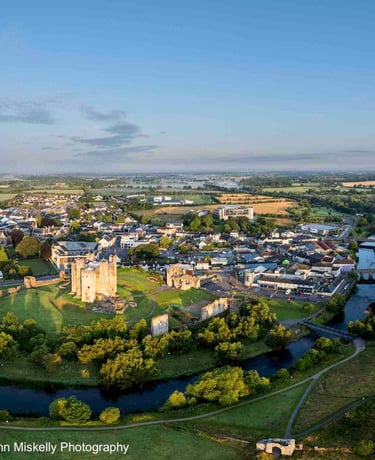
Trim Castle is the largest, best-preserved & most impressive Anglo-Norman castle in Ireland. Trim gets its name from the Irish Baile Átha Troim, meaning ‘Town of the Ford of the Elder Trees', indicating that this was an important fording point on the River Boyne. Such was the significance of this crossing point that by the fifth century a chieftain's dún (fort) and an early monastery were sited here.
Trim Castle was built in 1172, shortly after the arrival of the Anglo-Normans in Ireland. King Henry II granted his baron Hugh de Lacy the Kingdom of Meath, along with custody of Dublin. The King feared that another of his barons Richard de Clare (also known as Strongbow) might set up a rival Anglo-Norman kingdom in Ireland, and gave de Lacy Meath as a counterbalance to Strongbow's powerbase in the south of Leinster.
The Hill of Tara
Dunsany, Navan, Co. Meath, C15 P44
https://heritageireland.ie/places-to-visit/hill-of-tara
046 902 5903 / 041 988 03
hilloftara@opw.ie
Admission to the Hill of Tara site itself is free of charge.
The Hill of Tara accessible all year round. It is an open site and is accessible at any time. Notice: As much of the tour is outdoors, visitors are advised to wear weather protective clothing and shoes suitable for walking over uneven terrain. Restricted access for visitors with disabilities.
Visitor Centre Opening Times:
1 May – 30 September 2026
Daily 10:00 – 17:00
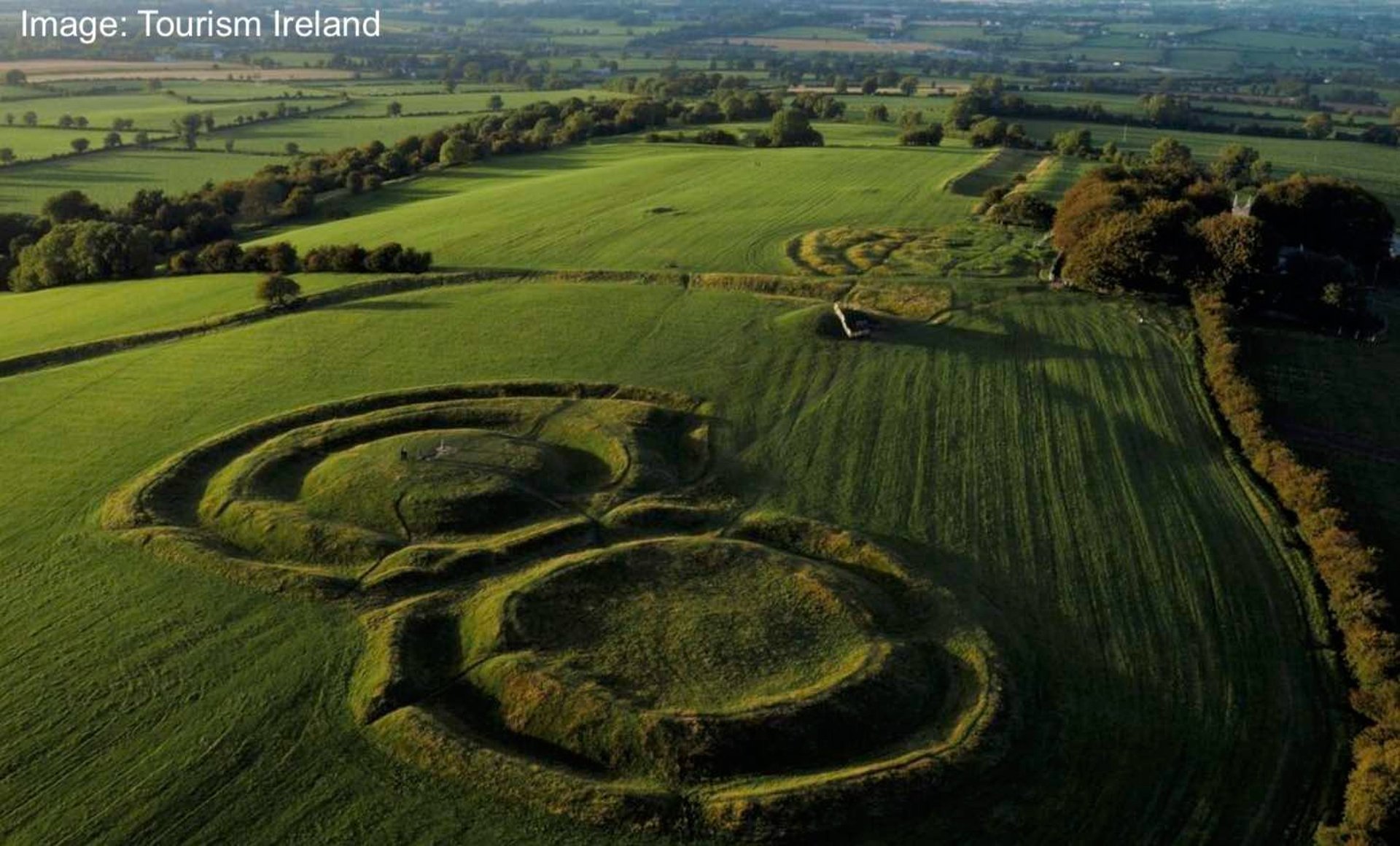
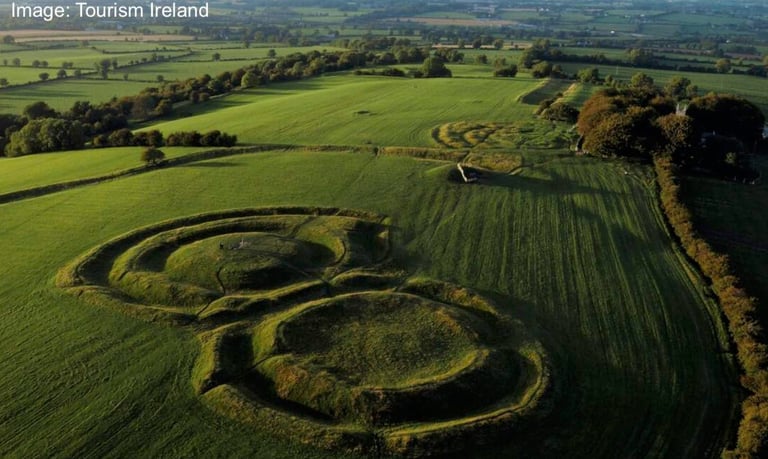
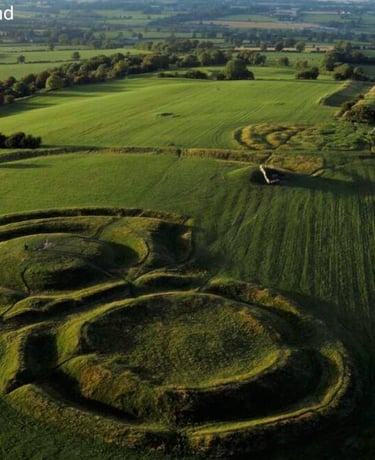
The Hill of Tara has been important since the late Stone Age, when a passage tomb was built there. However, the site became truly significant in the Iron Age (600 BC to 400 AD) and into the Early Christian Period when it rose to supreme prominence – as the seat of the high kings of Ireland. All old Irish roads lead to this critical site.
St Patrick himself went there in the fifth century. As Christianity achieved dominance over the following centuries, Tara’s importance became symbolic. Its halls and palaces have now disappeared and only earthworks remain.
There are still remarkable sights to be seen, however. Just one example is the Lia Fáil – the great coronation stone and one of the four legendary treasures of the Tuatha Dé Danann – which stands proudly on the monument known as An Forradh.
Kilkenny Castle
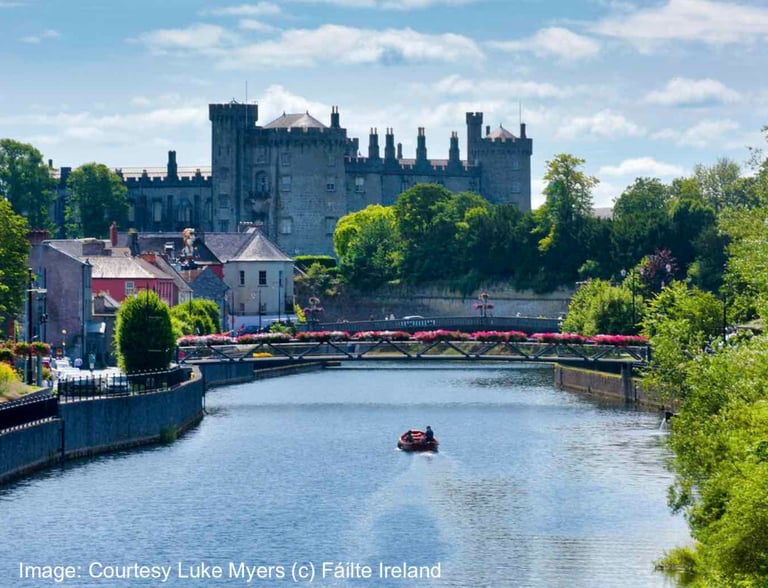
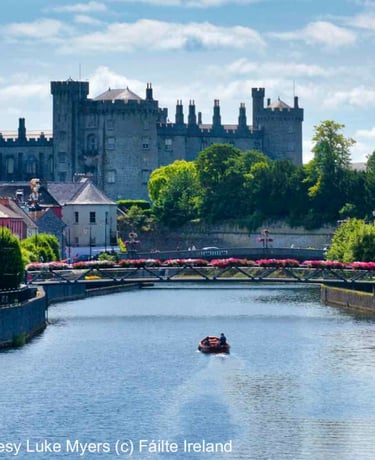
Built in the twelfth century, Kilkenny Castle was the principal seat of the Butlers, earls, marquesses and dukes of Ormond for almost 600 years. Under the powerful Butler family, Kilkenny grew into a thriving and vibrant city. Its lively atmosphere can still be felt today.
Kilkenny Castle, The Parade, Kilkenny, R95 YRK1
https://www.kilkennycastle.ie/
General Enquiries: 00353 567 704100
Entrance to the Kilkenny Castle parkland and gardens is free of charge. For entry into the castle itself (self-guided or guided tours), tickets can be purchased at the desk, with Adult tickets typically costing around €8-€10.
Clonmacnoise Monastic Site
https://heritageireland.ie/places-to-visit/clonmacnoise-monastic-site/
Clonmacnoise, Shannonbridge, Athlone, Co. Offaly, N37 V292
00353 (0)90 9674195
Price: €8 per adult
St Ciarán founded his monastery on the banks of the River Shannon in the 6th Century. The monastery flourished and became a great seat of learning, a University of its time with students from all over Europe.
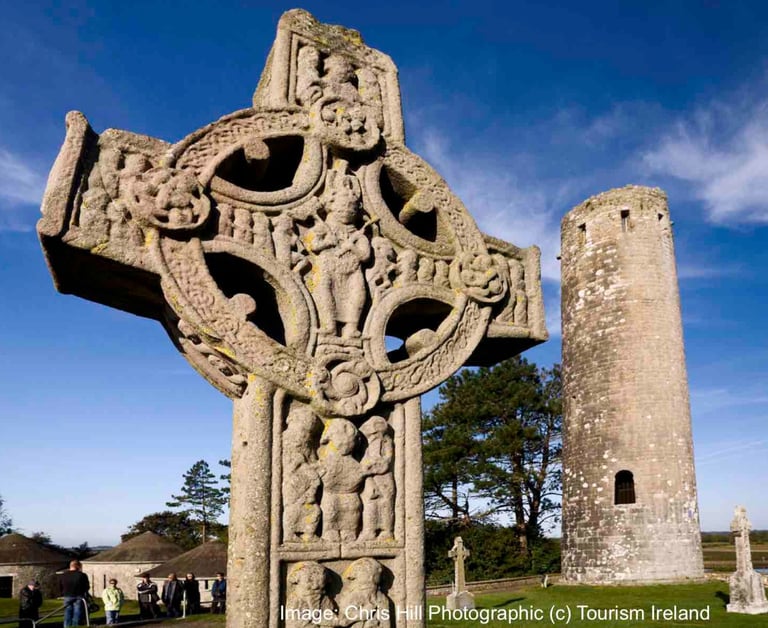
The ruins include a Cathedral, two round Towers, three high crosses, nine Churches and over 700 Early Christian grave slabs.
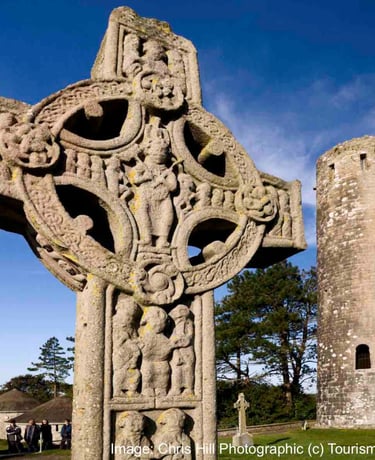
The original high crosses, including the magnificent 10th century Cross of the Scriptures are on display in a purpose-built visitor centre adjacent to the monastic enclosure. However, as of April 2026, the visitor centre and part of the site is being redeveloped. The monastic site at Clonmacnoise will remain open to the public during the construction phase. Temporary facilities, including public toilets and a Welcome Hub, are in place to ensure continuity of visitor services.
Rosslare to Dublin Rail Route
For ferry passengers from Fishguard and Pembroke Dock landing at Rosslare Harbour, the rail route from Rosslare to Connolly Station has been celebrated by the rail travel writer Vic O’Sullivan:
And is described in detail as a section of Route 5 in the book ‘Europe by Rail: the Definitive Guide’ by Nicky Gardner and Susanne Kries:
If arriving by an afternoon ferry in Rosslare, Gardner & Kries advise that you make an overnight stop. Kelly’s Hotel is a short walk from Rosslare Strand Station, one stop from Rosslare Harbour, while Clayton White’s Hotel is the nearest to Wexford’s O’Hanrahan Station. (Principal stations in Ireland are named after the heroes of the Easter Rising). Then you can enjoy the beautiful scenery of the train journey to Dublin in daylight.
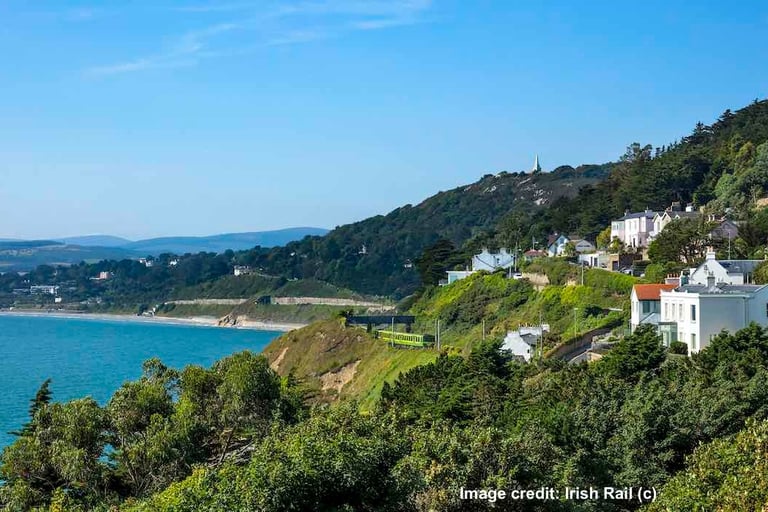
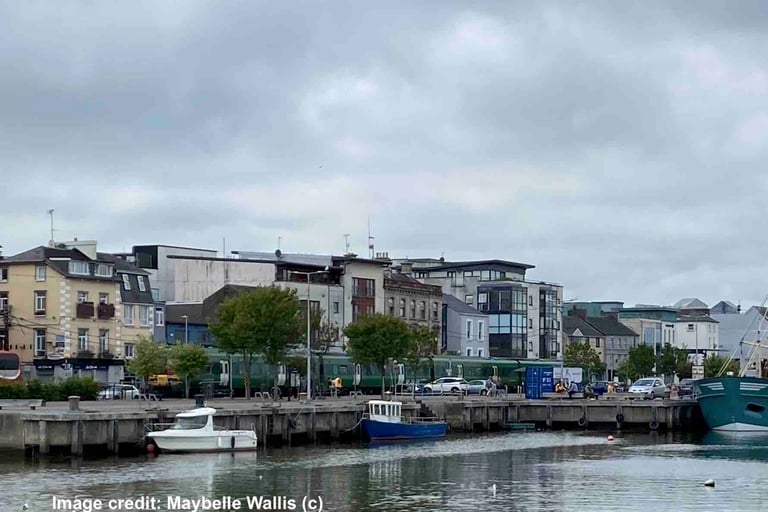
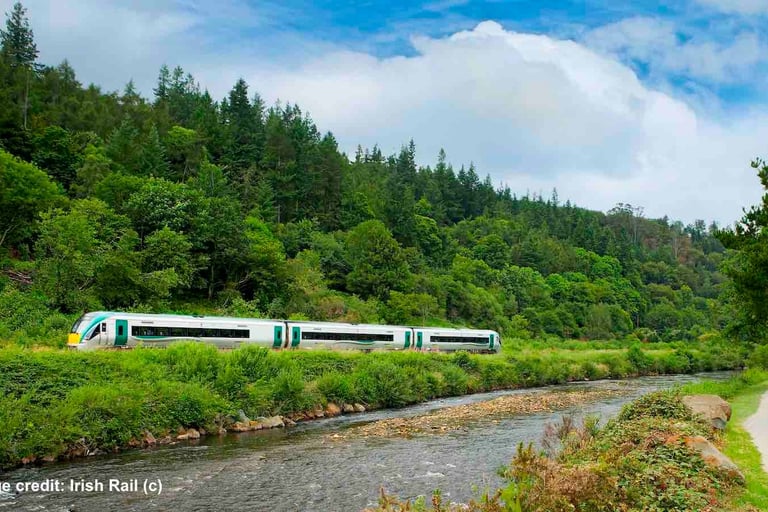
HIghlights of this unique rail route include: the quays of Wexford harbour - one of the few urban areas in Europe where trains and pedestrians share a space; the lovely riversides of the Slaney; and the lush Vale of Avoca in the Wicklow hills.
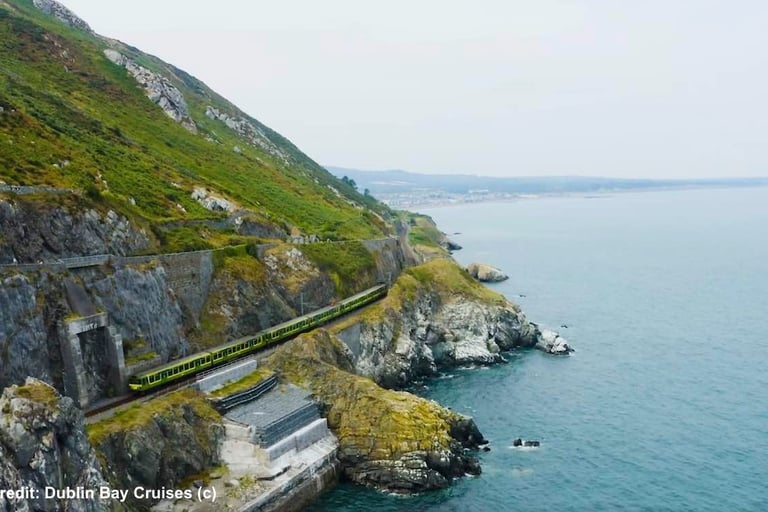
After running through the seaside suburbs of Dublin the train stops at Pearse Station in the south city centre before terminating at Connolly Station on the north side.
There is normally a sociable atmosphere on board, and railway buffs will note that the 5 foot 3 inch track gauge of Irish Railways - shared with Australia, and the widest in the world - makes for commodious carriages.
For links to ferries and train travel, see our Visiting Maynooth page.
"When the legend becomes fact, print the legend..."
Subscribe for email updates:
© 2025, 2026. All rights reserved.
Web design: Maybelle Wallis
Special thanks to Ireland's Content Pool for permission to use images
Contact the HNS 2026 team:
Proudly sponsored by Fáilte Ireland, by the Irish Writers' Union, and by Larbok Creative:

Extend your stay - Discover Ireland!

Hosting Irish PEN: