Connacht
Strokestown Famine Museum
The National Famine Museum, Strokestown Park, Strokestown, Co. Roscommon F42 H282
https://strokestownpark.ie/national-famine-museum/
info@strokestownpark.ie
Phone number: 353 71 963 3013
Adult Admission: €19
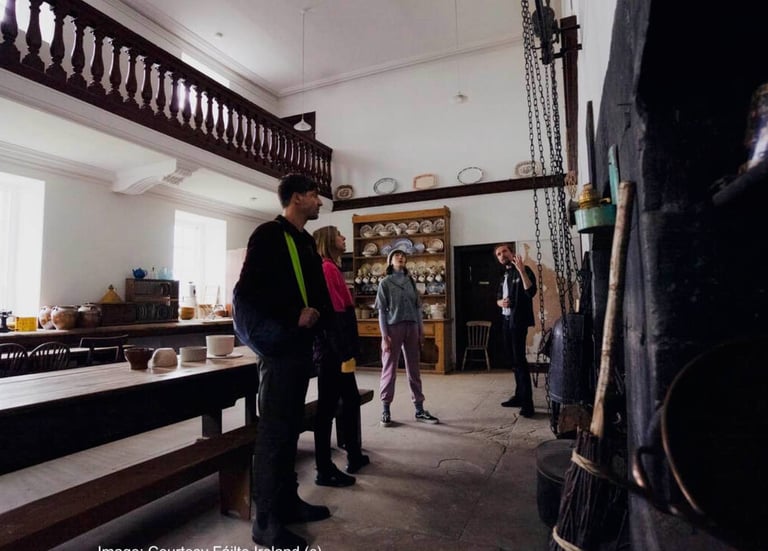
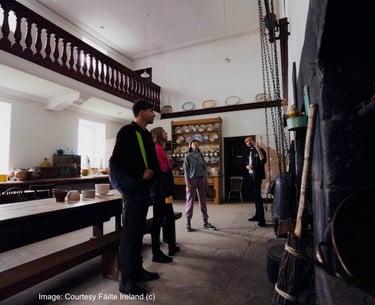
Explore the parallel lives of Strokestown Park’s aristocratic landlords and their tenants during the Great Irish Famine at our state-of-the-art National Famine Museum. In this compelling, highly interactive new museum, breathtaking local and national stories from this tragic period in Ireland’s past are brought dramatically to life.
Absorb the tenants’ experience of hunger, eviction, and exile, through voluntary and assisted migration. Engage with the landlord’s perspective, his power, dilemmas, and controversial assassination. Gain unique insights into a cataclysmic disaster that changed Ireland forever, creating a diaspora of Irish emigrants, forced to leave their homeland due to hunger, and of whom many did not survive the harrowing journey.
Recommended reading: Strokestown and the Great Irish Famine, by Ciarán Reilly, Four Courts Press.
Kylemore Abbey
Kylemore Abbey, Connemara, Co. Galway, H91 VR90
T: +353 95 52001
E: info@kylemoreabbey.com
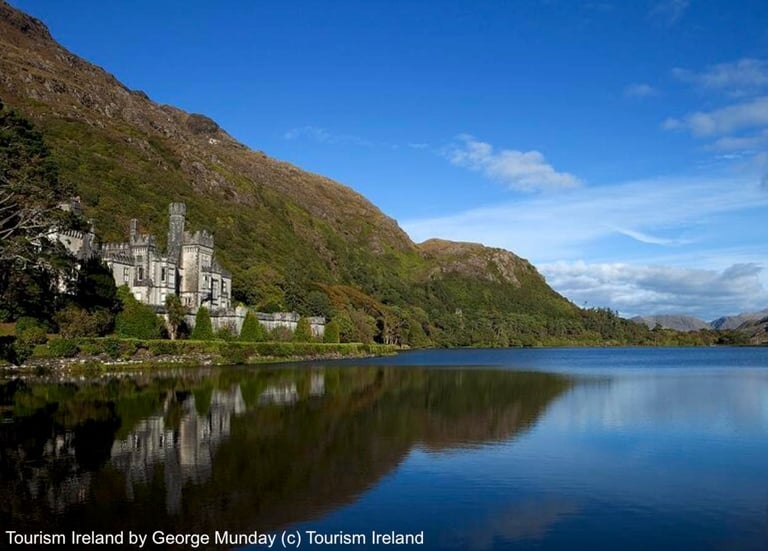
Kylemore Abbey is a Benedictine monastery and iconic visitor attraction set in 1,000 acres of mountainside in Connemara, Co Galway, Ireland. Owned by The Kylemore Trust, a non-profit organisation led by the Benedictine Nuns, Kylemore is a place of welcome and spirituality to thousands of visitors and pilgrims.
Kylemore Castle was built in the late 1800s by Mitchell Henry MP, a wealthy businessman, and liberal politician. Inspired by his love for his wife Margaret, and his hopes for his beloved Ireland, Henry created an estate boasting ‘all the innovations of the modern age’. An enlightened landlord and vocal advocate of the Irish people, Henry poured his life’s energy into creating an estate that would showcase what could be achieved in the remote wilds of Connemara. Today Kylemore Abbey is owned and run by the Benedictine community who have been in residence here since 1920.
Tickets from €18.00 (€15.50 for over 65s)
Full day entry to the estate includes:
Restored rooms and multi-media Abbey experience
Victorian Walled Garden,
Neo-Gothic Church & Mausoleum,
Kylemore Woodlands Trails & Tales
St Joseph's Industrial School
Letterfrack, Connemara, Co Galway
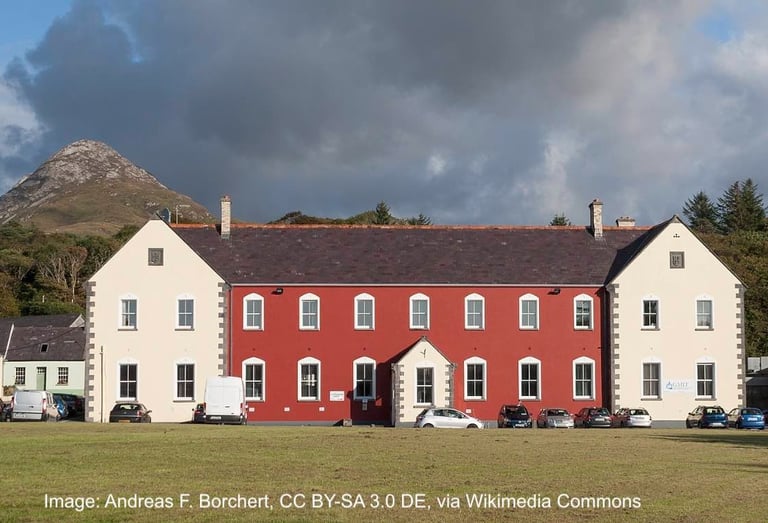
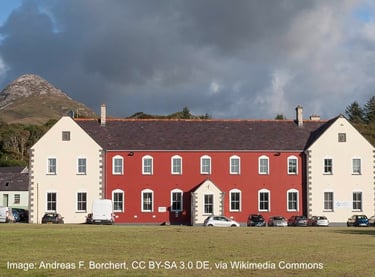
St Joseph's Industrial School was an industrial school for young boys in Letterfrack, County Galway, Ireland. The school was built in 1886/7 after the designs of the architect William Hague, opened in 1887, and run by the Congregation of Christian Brothers.
St Joseph's received a lasting notoriety through revelation of physical and sexual abuse of the boys by some of the Brothers there, with evidence of sexual abuse and extreme physical punishments going back to the 1930s. According to the Commission to Inquire into Child Abuse, between the years 1940 to 1970 15 children died there while in the care of the Christian Brothers, from causes including tuberculosis. Brother David Gibson, provincial of the Irish Christian Brothers' northern province, which includes Letterfrack, said that following a more thorough investigation of their files it was now established that 100 boys had died at the school during the 86-year period.
The school was closed in 1974. The building is now a campus site of Atlantic Technological University, at https://www.atu.ie/campus/connemara, for Furniture Design and Technology, and can be viewed from the exterior.
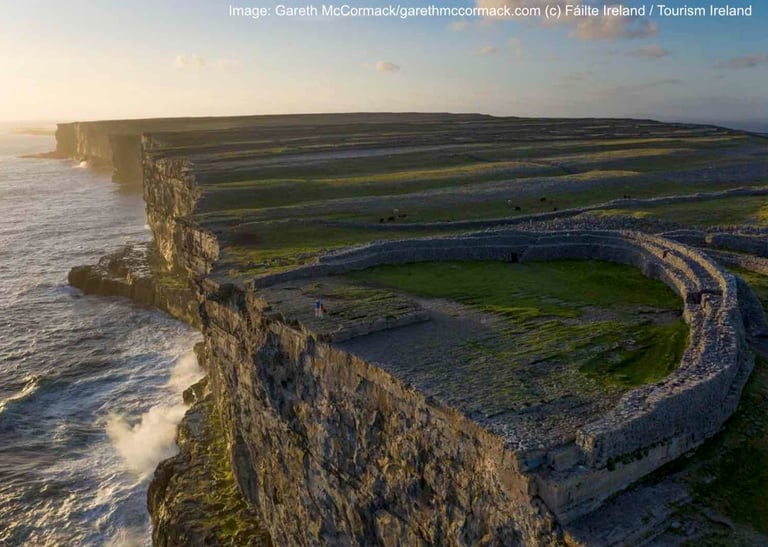
Dún Aonghasa – Ancient Stone Fort
Cill Mhuirbhigh, Inis Mór, Aran Islands, Co. Galway, H91 YT20
Tel: +353 (0)99 61008 dunaonghasa@opw.ie
https://heritageireland.ie/places-to-visit/dun-aonghasa/
Admission: Adult €5
Perilously perched on a sheer sea-cliff, Dún Aonghasa defiantly faces the Atlantic Ocean. It is the largest of the prehistoric stone forts of the Aran Islands.
The fort consists of three massive drystone defence walls. Outside them is a chevaux-de-frise – that is, a dense band of jagged, upright stones, thousands in number. A devastatingly effective way to impede intruders, the chevaux-de-frise surrounds the entire fort from cliff to cliff.
Dún Aonghasa is over 3,000 years old. Excavations have revealed significant evidence of prehistoric metalworking, as well as several houses and burials. The whole complex was refortified in AD 700–800.
The visit involves a short hike over rising ground and rough, natural rock, so come prepared with boots or strong walking shoes. Be careful, too, when walking near the cliff – there is no fence or barrier at the edge of the 87-metre drop.
Located 7 km west of Cill Rónáin (Kilronan). Local ferry boat service from Ros a ‘Mhíl (Rossaveel) to Cill Rónáin. There are also ferry services from Doolin, Co. Clare to Inis Mór. Air service from Indreabhán to Cill Éinne. Private tourist buses, bicycle hire, horse and carriages available for hire at the ferry port in Cill Rónáin.
Céide Fields Neolithic Site and Visitor Centre
Glenurla, Ballycastle, Co. Mayo, F26 PF66
https://heritageireland.ie/places-to-visit/ceide-fields-neolithic-site-visitor-centre/
Tel: 046 940 7250 ceidefields@opw.ie
Admission: Adult €5
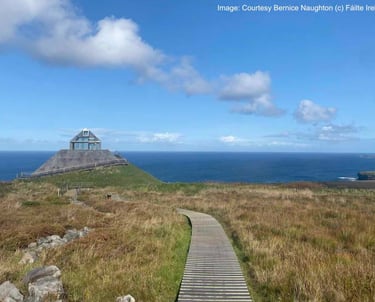
Beneath the wild boglands of north Mayo lies a system of fields, dwelling areas and megalithic tombs which together make up the most extensive Stone Age monument in the world. The stone-walled fields, extending over hundreds of hectares, are the oldest known globally, dating back almost 6,000 years. They are covered by a natural blanket bog with its own unique vegetation and wildlife.
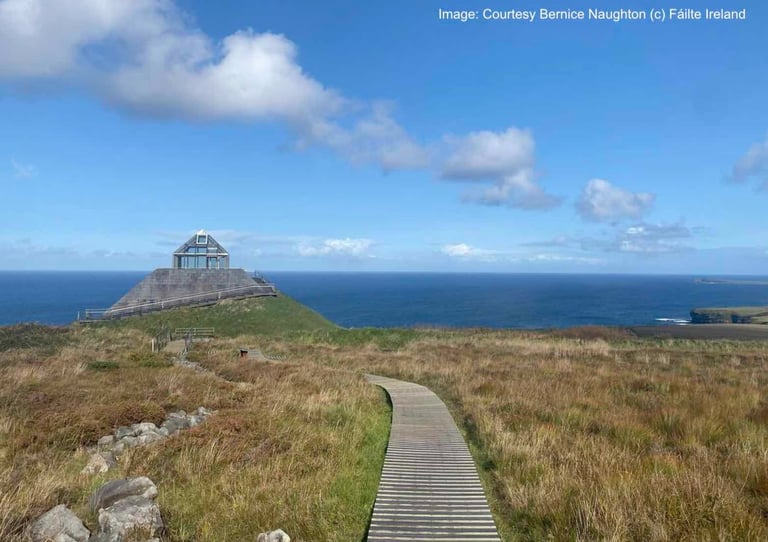
The award-winning visitor centre is set against some of the most dramatic rock formations in Ireland. A viewing platform on the edge of the 110-metre-high cliff will help you make the most of the breathtaking scenery. Come prepared with protective clothing and sturdy footwear, though. The terrain – and the weather – can be challenging.
Westport House
Westport, Co. Mayo F28 TY45
+353 (0)98 27766 info@westportestate.ie
Admission: Adult guided tour €15.
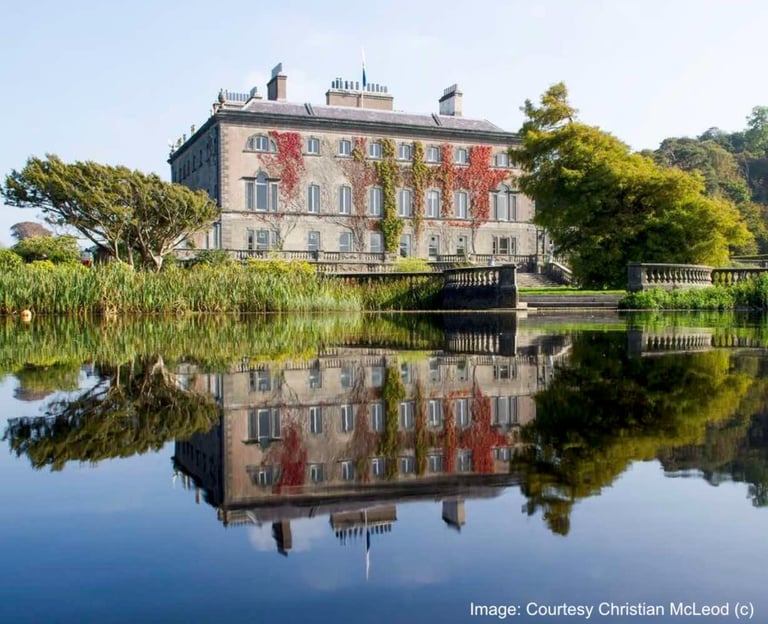
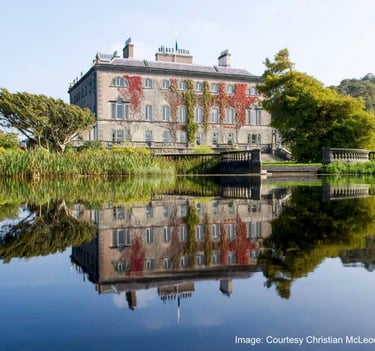
Considered a national treasure and one of ‘Ireland’s Most Beautiful Homes,’ discover over 300-years of history at Westport House. A great indoor activity, their guided tours are designed to amuse, bemuse and leave you wanting more.
Enjoy a world of stories from the incredible history of the house itself with tales of kings, queens, pirates and slave emancipators, as well as beautiful art and 3,000-year-old Greek sarcophagi with top-rated tour guides.
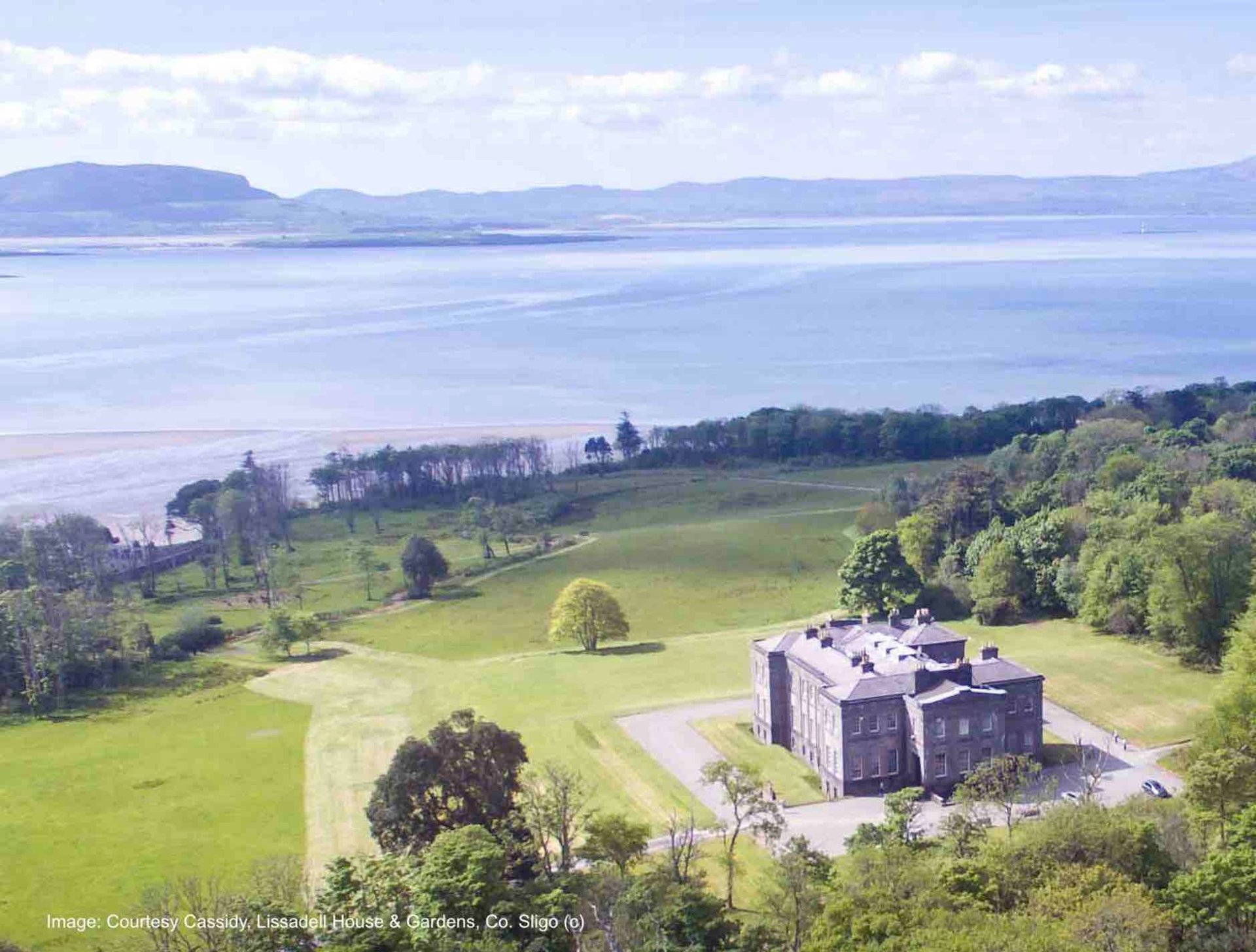
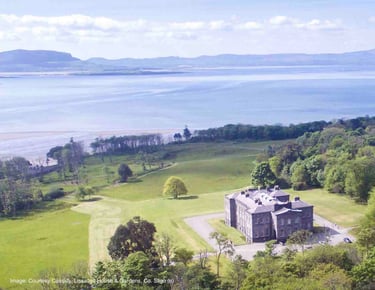
Lissadell House
Lissadell, Ballinfull, Co. Sligo F91 W2K1
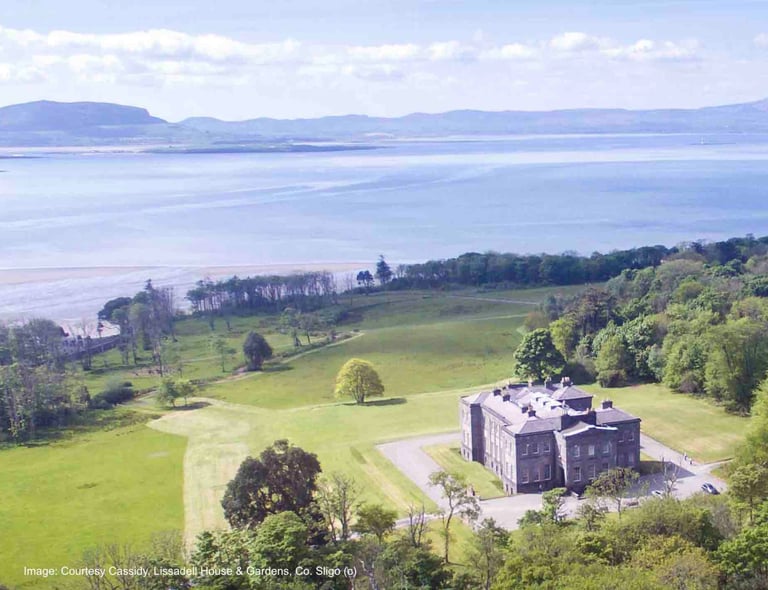
Tickets for tours of Lissadell House, Exhibitions and Grounds are are not available for purchase online. They can only be purchased in person by visitors at the Reception Desk in the Visitor Reception Centre (Coach House complex) in Lissadell. Admission adult: €16.
Lissadell is famous as the childhood home of Constance Markievicz, her sister Eva Gore-Booth and her brother Josslyn Gore-Booth. Constance was one of the leaders of the 1916 Rising, and was the first woman to be elected to Dáil Eireann, where she served as Minister for Labour (thus becoming the first woman minister in a modern Western European democracy), and was also the first woman to be elected to the House of Commons at Westminster, London (where she declined to take her seat). Eva was a poet of distinction and an active suffragist, clashing with the young Winston Churchill over barmaids’ rights in 1908. Josslyn created at Lissadell one of the premier horticultural estates in Europe. This horticultural enterprise has now been recreated at Lissadell.
The great poet W. B. Yeats was friendly with the Gore Booth sisters and stayed at Lissadell in 1892 and 1893. He immortalised Lissadell and the Gore Booth sisters in his poetry. Yeats' grave at Drumcliffe is a place of cultural pilgrimage.
"When the legend becomes fact, print the legend..."
Subscribe for email updates:
© 2025, 2026. All rights reserved.
Web design: Maybelle Wallis
Special thanks to Ireland's Content Pool for permission to use images
Contact the HNS 2026 team:
Proudly sponsored by Fáilte Ireland, by the Irish Writers' Union, and by Larbok Creative:
Extend your stay - Discover Ireland!

Hosting Irish PEN: